FREE WEBINAR: 21st CENTURY APPROACH TO ELECTRICAL SYSTEMS DESIGN.
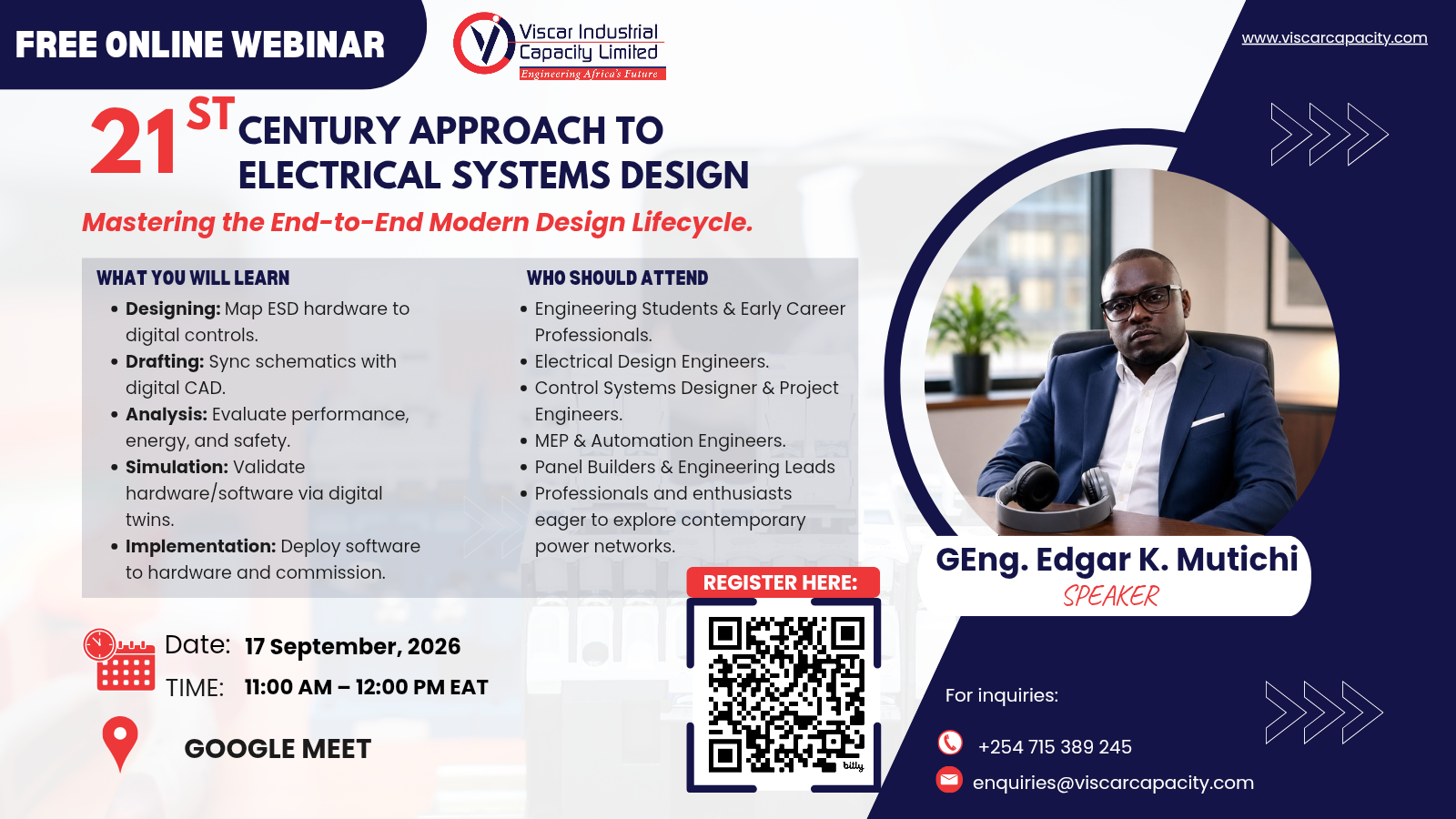
Mastering the End-to-End Modern Design Lifecycle.
Webinar Overview
The Core Concept
Bridge the gap between traditional electrical schematics and 21st-century digital control programming to modernize your engineering design process. Experience a direct, side-by-side comparison of a standard hardwired relay circuit alongside its corresponding digital software routine.
Understand exactly how physical components translate to software by visually breaking down power rails, physical contacts (inputs), and coils (outputs). Finally discover how to seamlessly map legacy hardwired systems directly into efficient, modern industrial automation programs.
What We Will Cover
- Designing: Architecting smart electrical systems by mapping physical ESD gadgets to digital control requirements.
- Drafting: Generating intelligent schematics that synchronize physical hardware configurations with digital CAD documentation.
- Analysis: Evaluating system performance, energy metrics, and safety compliance for integrated electrical and digital infrastructures.
- Simulation: Validating the interaction between physical ESD gadgets and software-defined logic via digital twin modeling.
- Implementation Strategies: Executing seamless transitions from digital control programs to physical hardware deployment and live commissioning.
Why You Should Attend
- Bridge Legacy and Modern Systems: Learn to effectively transition from traditional hardwired relay circuits to sophisticated, software-defined 21st-century digital control programming.
- Master the End-to-End Design Lifecycle: Gain a structured understanding of the complete electrical systems design process, from architectural design and intelligent drafting to simulation and final implementation.
- Gain Practical Software Insights: Observe live demonstrations, illustrating how to program real-world control sequences and logic parameters.
- Avoid Common Engineering Pitfalls: Learn how to identify and solve critical issues such as unintentional latches, address overlaps, and scan-time errors using professional diagnostic and monitoring tools.
- Explore Digital Twin Modeling: Discover how to utilize simulation and virtual commissioning to validate your designs in real-time, significantly reducing errors before actual hardware deployment.
Who Should Register?
- Engineering Students & Early Career Professionals.
- Electrical Design Engineers.
- Control Systems Designer & Project Engineers.
- MEP & Automation Engineers.
- Panel Builders & Engineering Leads.
- Professionals and enthusiasts eager to explore contemporary power networks.
×